
Office Workers, Travelers, Campers: Which Power Bank is Right for You in Japan?
Everyone's lifestyle in Japan is different, and the most suitable power bank varies accordingly.
Some people have long commutes and need a lightweight yet stable battery; some spend their weekends sightseeing; others love hiking, camping, or long-distance travel.
This article uses three typical Japanese users to help you find the most suitable type of power bank for you.
1. Japanese Office Workers/Students: Lightweight, 10,000mAh is Just Right
Common characteristics of this group:
They spend most of their day at work or school, with easy access to power outlets, but their long commutes mean their phones are often used for watching videos, browsing social media, and replying to messages.
Recommended Key Features:
-
Capacity: Around 7,500–10,000mAh.
-
Output: At least 18W USB-C PD, supporting basic fast charging.
-
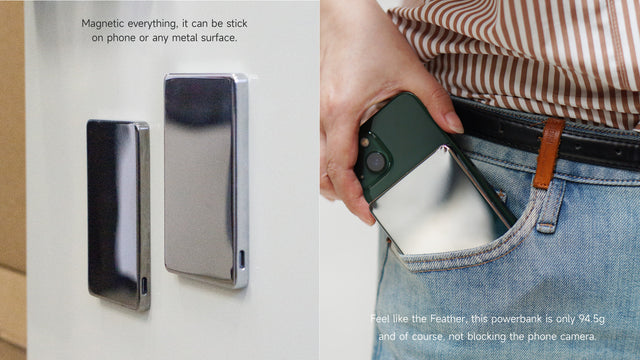
Form Factor: Slim and lightweight, fits in a suit pocket, shoulder bag, or small handbag.
The advantages of this combination are:
-
One charge during your commute is enough to last the entire workday.
-
It won't be too heavy and inconvenient to carry around every day, eventually making you never want to leave the house.
If you're an office worker who carries a laptop and phone to and from work every day, and don't play games or watch videos for long periods outside, 10,000mAh is almost the ideal choice.
2. Tourists & Weekend Getaways: Medium to Large Capacity, Multiple Output Ports are More Practical
For those traveling independently in Japan, or those who live in Japan but enjoy weekend day trips or two-day/one-night trips to other cities, the usage scenario is different:
-
They're out and about all day, rarely having time to sit down and plug in their devices.
-
They'll be using maps, translation, cameras, booking apps, and shopping apps simultaneously.
-
They often travel with two or more people, leading to moments when their phones are almost out of battery.
Recommended Key Points:
-
Capacity: 10,000–20,000mAh.
-
Output: At least two output ports (USB-C + USB-A or dual USB-C), supporting fast charging of 18W or higher.
-
Design: Bright colors or a battery level indicator to avoid being easily missed when left in a hotel or coffee shop.
A medium to large capacity power bank not only keeps your own phone charged all day but can also help your travel companions in an emergency.
Multi-port outputs allow you to charge two phones simultaneously or a phone + Wi-Fi router without disrupting your trip.
3. Camping, Outdoor Activities, Long-Distance Travelers: High Capacity + High-Power PD
If you frequently camp in the suburbs or mountains, or often travel by long-distance bus, overnight bus, or intercity travel in Japan, then "few outlets" will be a daily occurrence.
In this case, the power bank's role is not just "backup power for your phone," but part of your entire equipment system:
-
Flashlight/Headlamp
-
Camera
-
GPS or Navigation Device
-
Mobile Router
-
Even Laptop
Recommended Highlights:
-
Capacity: 20,000mAh or higher.
-
Output: 30W or higher USB-C PD is needed to effectively power tablets, Switches, or some laptops.
-
Construction: Durable, scratch-resistant, and preferably drop-resistant.
Note that higher capacity inevitably comes with greater weight and size.
If you need to backpack through mountainous terrain, you'll have to trade off between "security" and "weight." Sometimes two medium-capacity batteries are more flexible than one ultra-high-capacity battery.
4. Give Yourself a Quiz
Before we finish, ask yourself a few questions:
-
Do you commute for more than 30 minutes every day?
-
How many times a month do you spend the entire day outdoors?
-
How many times a year do you go camping or to remote areas?
-
Do you use a power bank to charge your tablet, Switch, or laptop?
Put yourself in one of these scenarios, and you'll have a better idea of which type of power bank you should look for.
In the next article, we will explain from the perspective of "safety and regulations" why you must look for the PSE mark when buying a power bank in Japan, as well as the new regulations for air travel starting in 2026.