
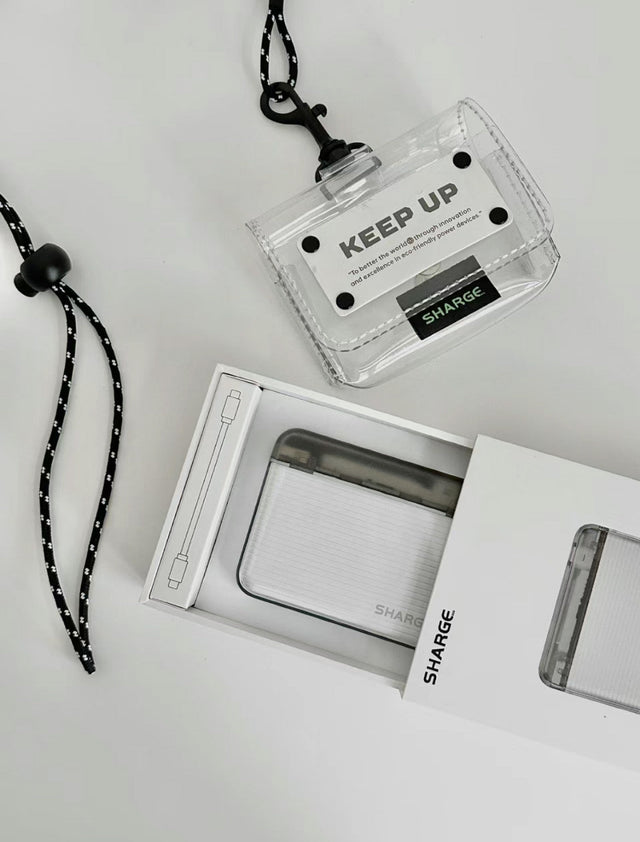
When buying a power bank in Japan, pay attention to the PSE mark and airport regulations (2026 latest)
Many people only look at capacity and price when choosing a power bank, but overlook something more important: safety and regulations.
In Japan, power banks are not just electronic products; they involve national safety standards and aviation regulations, especially since new restrictions on the use of power banks on airplanes will be implemented starting in 2026.
This article provides a quick overview of two key points: PSE certification and precautions for air travel.
1. What is PSE? Why is it necessary in Japan?
PSE is a Japanese safety certification mark under the Electrical Appliance and Material Safety Law, used to indicate that the product meets Japanese standards for electrical safety.
Power banks sold in Japan should usually have the PSE mark, indicating that the battery has undergone basic safety testing.
How to confirm?
-
Look at the device: Many power banks will have a small circular or diamond-shaped mark on the back or side, containing the word "PSE".
-
Check the packaging: The outer box or instruction manual will indicate that the product has passed PSE certification.
Why is this so important?
-
Because power banks contain lithium batteries. If the quality is poor, there is a risk of overheating, swelling, or even fire during charging or use.
-
When choosing a power bank in Japan, it's best to skip any products with unclear origins, ambiguous labeling, or no PSE logo.
2. Power banks will no longer be allowed on Japanese airplanes from 2026.
Japan has placed particular emphasis on the safety of lithium battery products in aviation environments in recent years.
According to the latest regulations, from April 2026, the use of power banks will be completely prohibited in the cabin of domestic and international flights in Japan.
In short:
-
You can still bring compliant power banks on board.
-
However, you cannot use power banks to charge mobile phones, tablets, or other devices on the plane.
This will have a significant impact on passengers who frequently travel to Japan or like to use power banks to watch videos or play games on airplanes. Passengers should be aware of this in advance to avoid being reminded by flight attendants or having their power banks confiscated.
3. General Principles for Bringing Power Banks on Airplanes
Besides the rule that power banks cannot be used on board, there are a few other basic principles to keep in mind when bringing power banks on flights in Japan (details may vary between airlines, but the general principles are similar):
-
Carry-on baggage only: Power banks cannot be checked in; they must be carried in the cabin.
-
Capacity restrictions: Generally, power banks under 100Wh are allowed, and most airlines allow around two (please be sure to check individual airline regulations).
-
Appearance must be intact: Products that are bulging, damaged, deformed, or do not have clear capacity markings may be required to be discarded by security.
Pre-departure recommendations:
-
Confirm that the power bank has a clear capacity marking (mAh or Wh).
-
Check the airline's website for current regulations and quantity restrictions.
4. When purchasing, consider both safety and travel plans.
If you are currently in Japan or plan to frequently travel between Japan and other countries, ask yourself a few questions when choosing a power bank:
-
"Does this power bank have the PSE mark?"
-
"Is the capacity exaggerated? Will it exceed the maximum allowed on most flights?"
-
"Is the build quality sturdy and doesn't feel cheap?"
Short-term price isn't an advantage. If problems arise during use or travel, not only will the cost be higher, but it may also disrupt your trip.
Therefore, when buying a power bank in Japan, consider the PSE mark and airline regulations as "invisible specifications," just as important as mAh and W.
In the next article, we'll use a "lazy person's decision tree" approach to organize all the previous content into 3 steps, guiding you to quickly choose the most suitable power bank for your life in Japan.